To book a cultural dance performance in Singapore, settle four things first: the occasion, the space, the length of the slot and the date. Then pick the dance that fits, check the floor and the sound rules with your venue, and send the troupe a clear brief at least two weeks before the event.
Price: a 15 to 20 minute Malay dance set or a classical Indian solo usually costs SGD 600 to 1,500, a Chinese cultural dance SGD 800 to 2,500 per set and a Bollywood troupe SGD 1,200 to 3,500. See how much a cultural dance performance costs in Singapore.
Step 1: let the occasion choose the dance
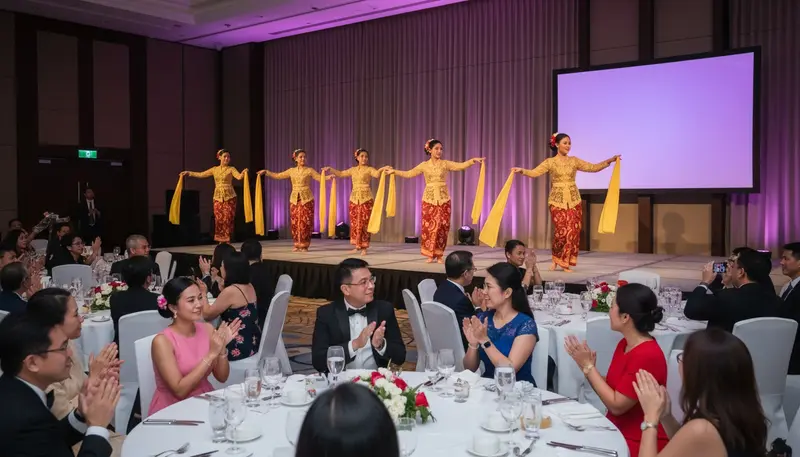
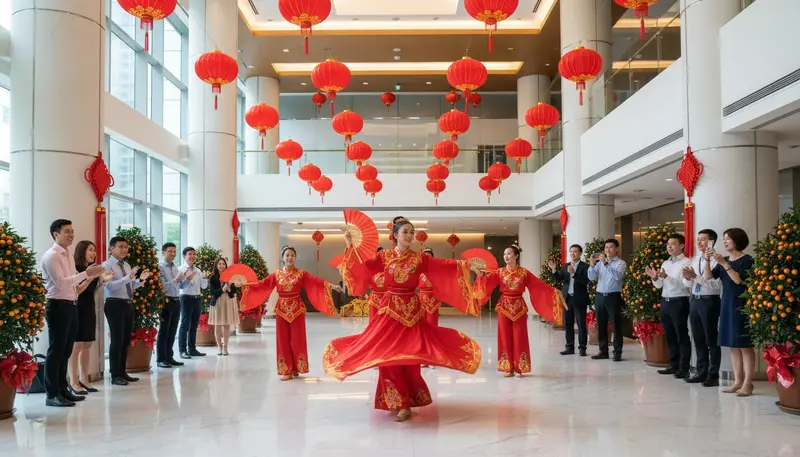
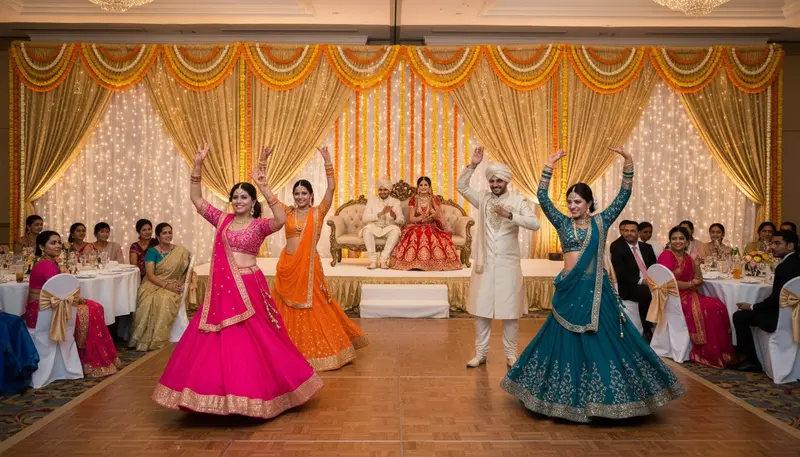
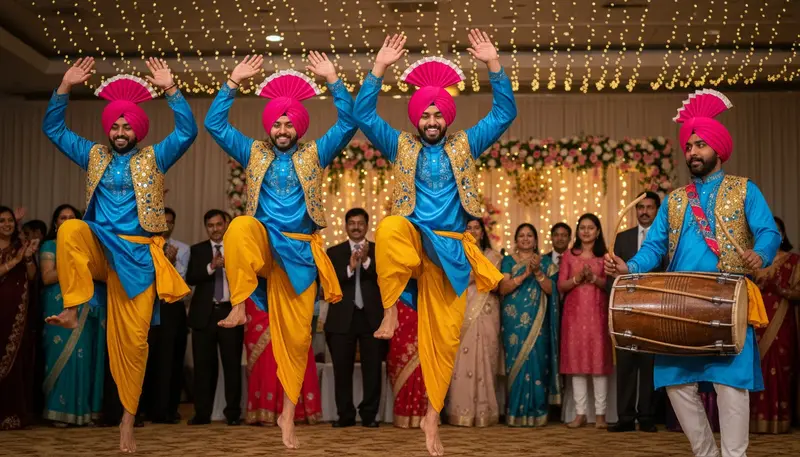
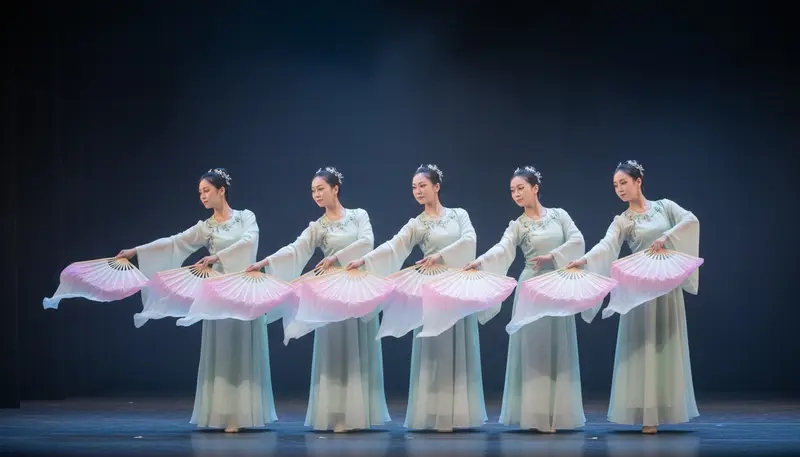
The occasion is usually the best guide. For Chinese New Year, a Chinese fan or ribbon dance. For Deepavali, Indian classical, Bollywood or bhangra. For Hari Raya, a Malay dance set or a kompang group. For National Day or a company event that celebrates diversity, a multicultural showcase with Chinese, Malay and Indian dance. For a wedding, the traditions of the two families. If you want guests on their feet, choose bhangra or joget. If the room is seated and formal, a fan dance or a classical Indian item.
Step 2: check the space
- A classical solo can perform on a 3 by 3 metre platform.
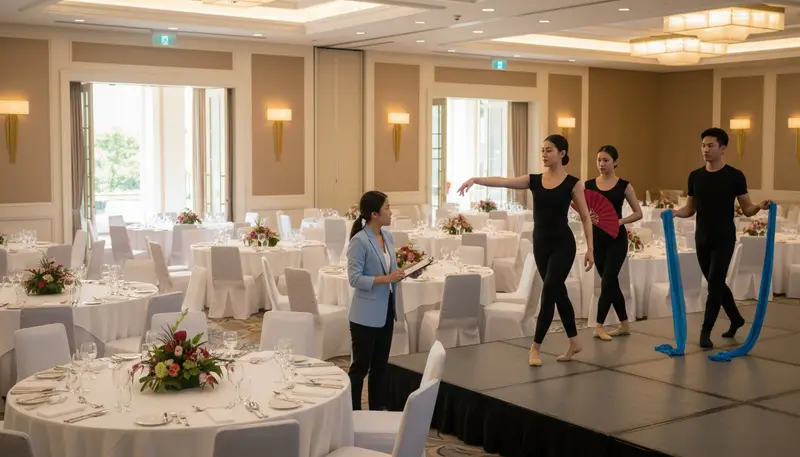
- A dance or kompang set needs about 3 by 3 metres as a baseline, more for six or more performers.
- A Bollywood or bhangra troupe of six or more needs at least 4 by 5 metres of clear, non slip floor.
- Marble and polished tile lobbies can be slippery for footwork; ask the venue about a dance floor or matting.
- Ribbon and fan dancers with wide movements may need a high ceiling.
- Once the crowd passes about 80 people, a raised stage helps people at the back see.
Step 3: check the sound
Dhol and bhangra are loud and carry. That is fine outdoors or in a ballroom, and a problem in an enclosed office lobby with sound restrictions. Classical dance with narration needs a clean sound system and a microphone. If the troupe uses a backing track, you need a power point near the performance spot. Ask your venue about noise curfews and volume limits before you confirm the act.
Step 4: fix the slot
Most items run 10 to 20 minutes. Build the routine for the slot you have: a 10 minute solo looks thin stretched to 30 minutes, and a troupe built for 45 minutes will not fit a 15 minute corporate slot. Time the item when the room can watch, such as after the welcome speech, between courses or before the dance floor opens. A programme with several acts needs a compere to bridge the segments.
Step 5: brief the troupe
Send the choreographer:
- The exact stage or floor size, the ceiling height and the surface (stage, tile, carpet, grass).
- The audience: staff, families with young children, elderly guests or a mixed crowd.
- The time slot in your programme and its length.
- Whether guests should be invited on stage. That needs a compere to manage it.
- Any venue rules on volume or song content.
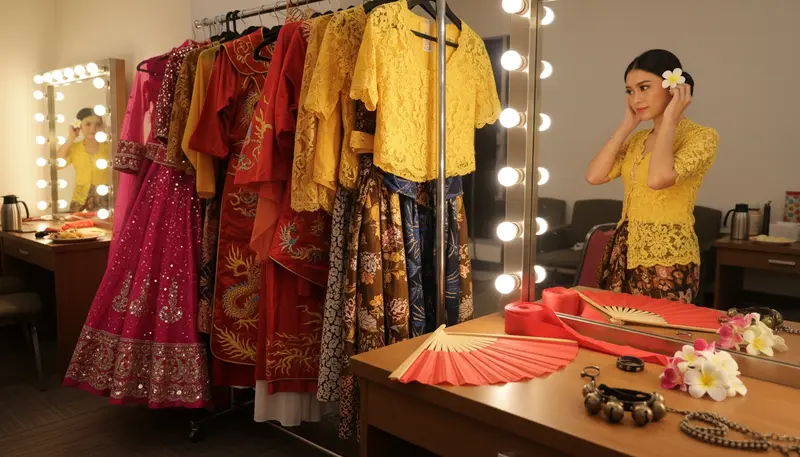
- Whether the dancers need a changing room near the stage.
Send it at least two weeks before the event, so the troupe rehearses for your space.
Step 6: book early enough
Book at least 2 to 4 weeks ahead, and earlier for year end, wedding season and festivals. Company events are best booked 6 to 8 weeks ahead, and 3 to 4 months ahead for December, the Chinese New Year period and Saturday evenings. For Chinese New Year, companies start booking from November. For Deepavali, the two weekends before the festival fill first. For Hari Raya, Ramadan to Syawal is the busiest season.
What happens next
You send the brief. You get a shortlist with photos, videos and profiles of troupes who are free, and a price, usually within a working day. You choose, the date is confirmed, and the troupe rehearses for your space. Send your date and venue on WhatsApp or through the quote form.